How Can Football and Sports Clubs Build One Trusted Fan Record in 2026?

TL;DR: Football and sports clubs build a trusted fan record by resolving permitted ticketing, membership, retail and digital traces into one reviewable identity, while preserving the source, consent and reason for each link. CRM or CDP identity tools are often enough; MDM and a dedicated resolution layer serve different jobs when the operating stakes grow.
Book a Demo · Try Tilores Studio (Free)
On this page
- What makes a single fan record useful?
- Why does sports identity break across systems?
- Which fan relationships need to be connected?
- What makes the record trustworthy?
- When is CRM, MDM or entity resolution the right job?
- Where does Tilores fit into this?
- How should a club start without creating a risky merge?
- Frequently asked questions
- Sources
Rob Pickering, R Pickering and RP may look like three small data-quality defects. In a club, they can be the same person who holds a membership, buys a shirt, attends a match and asks a stadium question. The danger is not only a missed commercial opportunity. An incorrect link can give staff or an assistant the wrong account context, while a missing link leaves the fan repeating the same information.
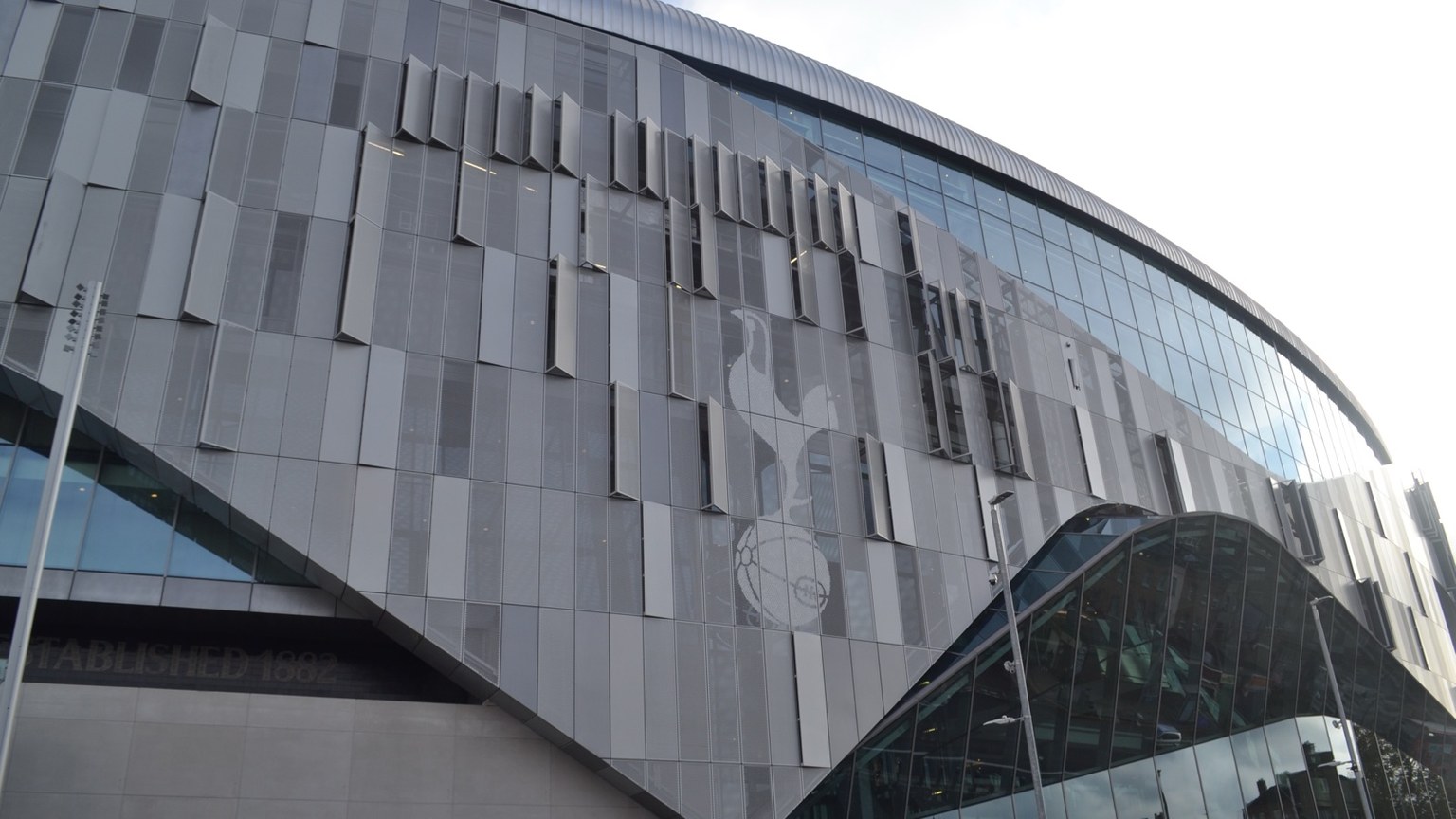
Tottenham’s reported Salesforce work is a useful opening case, not a template every club must copy. Sports organisations vary in membership rights, ticketing arrangements, ownership models, matchday rules and international audience mix. The common task is to recognise a supporter appropriately across legitimate touchpoints, then make a decision about what one profile should mean in each system.
What makes a single fan record useful?
A single fan record is not a new database that erases the systems a club already depends on. It is a reliable view of the relationships that can be supported: one person, their known source records, their current contact preferences and the evidence for each connection. It needs to distinguish a fan from a household member, a ticket purchaser from an attendee, and a season-ticket holder from a guest.
The reported Tottenham story makes that practical. IT Pro reported that the club brought more than 35 sources into a single fan record after finding versions of the same person under three name forms. Salesforce’s 2026 award page describes a later snapshot in terms of 30 systems, 4.6 million fans and Ask Spurs. Those are case-study claims from the parties involved, but they show the operational objective: a service interaction should have enough context to recognise the supporter without assuming every record is the same person.
The value extends beyond football. The NFL describes a platform joining league, club and partner data for ticketing, merchandise, live events and digital marketing. New Zealand Rugby describes a unified layer spanning ticketing, membership, events, digital properties and streaming. Neither case removes the need for local governance. Both show why a fan identity becomes an operating asset once a sport serves people across many channels.
Why does sports identity break across systems?
Sports has recurring identity conditions that ordinary ecommerce designs often miss. A supporter can register for a ballot with one address, buy hospitality through work with another, change a surname, receive a gift ticket, use a family email, or create a new app account in another country. International fan bases introduce transliteration and name-order variation. A matchday guest may be entitled to entry without becoming the club’s marketing contact.
Ticketing makes this especially visible. The Miami Heat case study distinguishes the original purchaser from a transferred-ticket holder and describes a chain of custody. That distinction matters for arrival support and fraud controls. It is a reason to model relationships, not a reason to merge every person attached to a purchase into one profile.
Membership adds further constraints. ECB supporter access links priority windows and ballot communications to an opt-in stored through its membership hub. In French rugby, Union Bordeaux Begles’ SSO case identifies ticketing, shop, app and content accounts as sources that can fragment a supporter relationship. An SSO can reduce future duplication, but it does not resolve historic duplicate records by itself.
New posts on entity resolution, identity data and AI. No spam, unsubscribe any time.
Which fan relationships need to be connected?
Start from a club’s actual decisions, not a wish for a 360-degree screen. A ticket-support team needs to know whether a caller holds a valid entitlement. A membership team needs member status and preference. A stadium operation may need a verified access relationship. A service assistant needs enough current context to answer safely. Each decision has a different minimum data set and a different consequence if the identity is wrong.
- Ticketing and access: purchaser, attendee, transfer and authorised resale relationships.
- Membership and ballots: eligibility, loyalty status, household boundaries and voting or member rights where applicable.
- Retail, hospitality and events: the commerce relationship without turning a guest purchase into an unsupported person-level claim.
- App, content and service: account identity, language, preference and a traceable consent state.
Some leagues operate identity at ecosystem scale. LaLiga’s ecosystem notice describes a unique fan profile, central account and a distinction between global and asset-specific consent choices. For German clubs, fan identity also sits beside member governance: a 2026 Bundesliga statement describes the 50+1 principle as members holding majority voting rights. A data design must never let commercial convenience rewrite membership rights or club democracy.
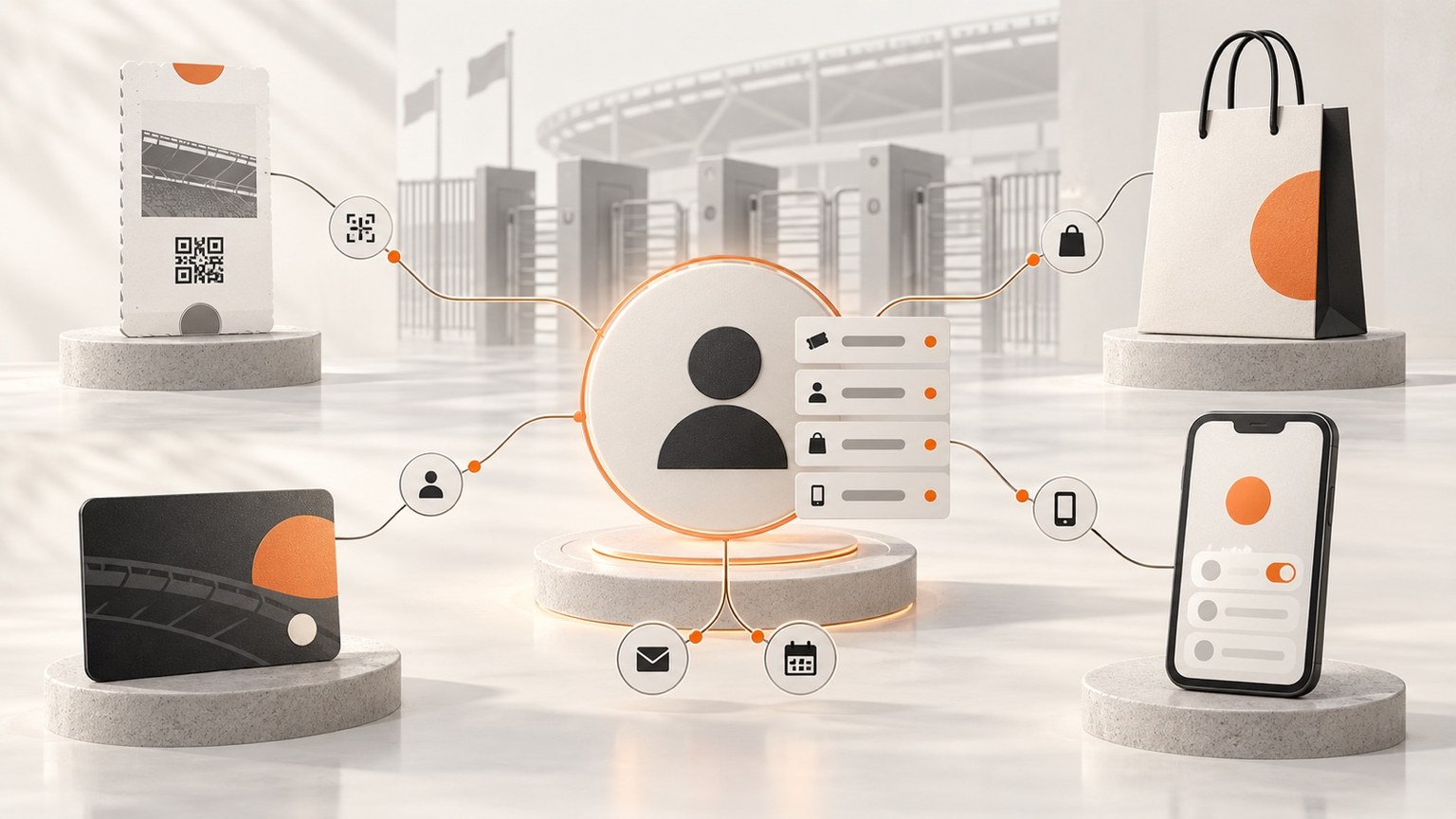
A single fan record should preserve the touchpoint and evidence behind every connection.
What makes the record trustworthy?
Trust begins with a modest claim: the record should show what is known, what is inferred and what is uncertain. Keep source identifiers, timestamps, matching evidence and a route to correct a bad link. Avoid turning a shared address, a family card or a common surname into a merge rule. A system that can explain why it linked two records is safer to review than one that produces a persuasive but opaque profile.
Consent and purpose belong in the same design. The ICO’s direct-marketing guidance says electronic contact details engage PECR alongside data-protection law, while its consent guidance calls for granular choices, clear records and an easy withdrawal route where consent is used. A single record should carry those boundaries into the activation system. It should not transform a ticket transaction into a blanket marketing permission.
Identity may also support legitimate ticket controls. In England and Wales, section 166 of the Criminal Justice and Public Order Act 1994 makes unauthorised sale of tickets for designated football matches an offence. The ECB’s ticket guidance says it can request verification of identity and source of purchase. Those controls need a narrow purpose, transparent policy and a clear distinction between a transfer, an authorised exchange and an unsupported account claim.
When is CRM, MDM or entity resolution the right job?
There is no universal winner. A club already committed to one CRM or CDP may find its built-in identity capability sufficient. Salesforce, for example, documents rulesets with match rules that link profiles and reconciliation rules that select values for a unified profile. Its own documentation also warns that looser fuzzy methods can increase consolidation. That is a useful capability when its configuration, audit needs and decision timing fit the club.
Three jobs that are often confused in fan-data programmes
| Approach | Primary job | Good fit | Boundary to test |
|---|---|---|---|
| Built-in CRM or CDP identity resolution | Unify profiles inside the engagement stack for segmentation, service and activation. | One core stack, manageable source set, matching rules and consent model already fit the operating need. | Households, changed contacts, international names, transfer relationships and whether the real-time path applies the same logic. |
| Master data management | Govern authoritative master data, survivorship, stewardship and enterprise-wide data policy. | Many domains need governed master records and cross-business ownership. | Whether it can make an explainable identity decision at the moment a ticket, ballot or turnstile interaction occurs. |
| Dedicated entity resolution engine | Resolve who is who across noisy source records and expose the current identity to several tools. | Multiple systems need the same decision, records vary across countries, and teams need evidence for merges, splits and review. | How it fits with the existing CRM, MDM and ticketing estate, plus the operating ownership of rules and exceptions. |
The approaches can work together. A CRM can activate the profile, an MDM can govern master values and an entity-resolution layer can supply the evidence-backed identity each system queries. The architectural question is where the linkage decision belongs and who can inspect or reverse it.
Where does Tilores fit into this?
We fit where a club, league or sporting body needs a real-time identity decision across more than one system without replacing its existing engagement or mastering tools. We ingest records, normalise fields and resolve entities through a GraphQL API. Our product architecture keeps deterministic, fuzzy and probabilistic matching distinct, with explainable links and source evidence in the resolved graph.
That can help when a ticket purchase, ballot entry, stadium query or service request needs the current identity now, and when the same answer must reach a CRM, a support service and an AI assistant. Our MDM guidance sets the boundary plainly: we can act as the real-time resolution layer while an MDM keeps its governance role. A club whose CRM rules already resolve the required cases well may not need another engine.
Deployment is also a legitimate decision. We run fully managed on AWS or inside a customer’s own environment, with the same GraphQL API and matching engine. Our deployment options cover managed AWS, a customer’s AWS account, another cloud and on-premise arrangements. The right choice depends on the club’s data perimeter, operating team and contractual constraints, not a default architecture.
Book a Demo to test the fan-identity cases that matter to your organisation.
How should a club start without creating a risky merge?
- Name the decision. Define the ticketing, membership, service or access decision that needs identity, plus the cost of a wrong match and a missed match.
- Map each relationship. List systems, source IDs, fields, consent states, transfer paths, household links and the people who can correct a record.
- Build a reviewed test set. Include name variants, email changes, international formats, family relationships, guests and cases that must remain separate.
- Set matching and review rules. Decide which evidence permits an automatic link, which cases go to review and how a user can challenge an outcome.
- Publish a narrow output. Give each downstream tool only the identity, relationship and consent context it needs, then monitor false links and unresolved duplicates.
F1’s current service story is a reminder that the destination is useful context, not an identity graph for its own sake. Salesforce reports that F1 first joined internal and external data sources, then used that foundation to help service teams answer fan questions. The next step for any sport should be a bounded decision where staff and supporters can see the benefit and challenge mistakes.
Frequently asked questions
What is a single fan record?
A single fan record is a connected, evidence-backed view of one person across permitted club touchpoints. It should retain source records, consent and the reason each record was linked, instead of flattening different people into one profile.
Can a club use one email address as the fan identifier?
No. An email address can be an important signal, but it can change, be shared or be absent. Clubs should combine appropriate evidence and keep a way to review uncertain matches.
Is CRM identity resolution enough for a sports club?
Often, yes. A built-in CRM or CDP capability can be enough when the needed matching, governance and activation are inside that stack. Test its rules against household, transfer, international-name and real-time matchday cases before deciding.
Why does ticket transfer matter to fan identity?
The purchaser and the attendee may not be the same person. A useful identity design retains the authorised ticket relationship and transfer history, so access, support and anti-fraud controls do not assume that every ticket belongs to its original buyer.
Where does Tilores fit for sports organisations?
Tilores fits where an organisation needs real-time, explainable entity resolution across several systems while keeping its CRM, MDM, ticketing and engagement tools in place. We provide the resolved identity layer through GraphQL, with deployment options that include managed AWS and the customer’s own environment.
Sources
- How Tottenham Hotspur worked with Salesforce to create the world’s best experiences for fans, IT Pro, 16 September 2026.
- 2026 Customer Success Awards, Salesforce.
- Unify Service Data with Identity Resolution, Salesforce Help.
- Identity Resolution Match Rule Terminology, Salesforce Help.
- Inside the NFL’s innovative fan data platform powered by AWS, AWS.
- New Zealand Rugby uses AWS to transform fan engagement and content delivery, AWS.
- LALIGA Ecosistema, LaLiga.
- Bundesliga welcomes Federal Cartel Office’s statement regarding 50+1 rule, Bundesliga, 12 August 2026.
- Plan direct marketing, Information Commissioner’s Office.
- Consent, Information Commissioner’s Office.
- Criminal Justice and Public Order Act 1994, section 166, legislation.gov.uk.
- We Are England Cricket Supporters: priority ticket access, England and Wales Cricket Board.
- Ticket touting, England and Wales Cricket Board.
- Union Bordeaux Begles: Using SSO as the foundation to structure fan relationships, Arenametrix, 18 May 2026.
- Formula 1 revs up fan engagement with fast support and tailored marketing, Salesforce.
- Miami Heat: Driving business growth through fan insights, Ticketmaster, 22 July 2021.
- Tilores product: entity resolution infrastructure, Tilores.
- Master Data Management: real-time entity resolution for MDM, Tilores.
- Deployment options: run Tilores where your data is allowed to be, Tilores.
See what resolved entity data does for your business — and your AI.