What Causes Data Silos & How to Fix Them?


TL;DR
- To unify customer data across CRM, marketing, product analytics, and support, teams need a shared entity layer that links records describing the same real customer without forcing every source system into one schema first.
- Data silos are caused by separate tools, departmental ownership, inconsistent identifiers, mergers, local spreadsheets, and incentives that make teams optimize their own workflows before the company-wide view.
- Entity resolution helps by resolving and assembling records at ingestion, preserving source context, and letting downstream systems retrieve the resolved customer context when they need it.
Table of Contents
- Decision guide
- Connecting data with an understanding of human nature
- The data silo problem
- Why are data silos bad?
- Solving data silos
- CONCLUSION: don’t think data silos, think entity resolution
- Short answer
- What causes customer data silos?
- What does a single customer view require?
- How does entity resolution connect CRM, marketing, and analytics data?
- How should teams start fixing silos?
- Why are data silos a human and technical problem?
- Frequently Asked Questions
Decision guide
| Question | Use Tilores when | Watch-outs |
|---|---|---|
| Are customer records spread across CRM, marketing, analytics, support, and spreadsheets? | You need one resolved customer context that links records without forcing every department to abandon its existing system first. | A migration-only plan can stall if teams disagree on ownership, fields, timing, or which system should become the source of truth. |
| Do identifiers differ across systems? | The same customer may appear under different emails, names, product IDs, account IDs, phone numbers, or address formats. | Exact-match joins can miss real relationships and can also merge records that look similar but describe different customers. |
| Do teams need customer context in operational workflows? | Support, fraud, analytics, marketing, and product teams need current resolved context while they work, not only a retrospective dashboard. | A periodic warehouse report can help analysis, but it may not give applications current identity context when a customer interacts. |
| Does the business need source traceability? | You need to know which CRM, campaign, product, or support record contributed to the resolved customer view. | A flattened customer table can hide where attributes came from, making correction, deletion, and trust harder. |
Connecting data with an understanding of human nature
Many people have a romantic view of a business as “one company indivisible”. They imagine today’s enterprise as an army of like minded individuals all working tirelessly towards the same goal, a thousand people in perfect synchronisation as a smoothly functioning hive mind.
And anyone who runs a business knows … nothing could be further from the truth.
A company is a population of individuals, inspired by their own motivations, following different goals, for different reasons. To the ultimate benefit of the company, of course – they want the business as a whole to stay successful. But in their day-to-day lives? The focus is on creating value and prestige for themselves and their closest colleagues. Aka “making a name for yourself”.
This quirk of human behaviour isn’t a bug, it’s a feature. It’s basic division-of-labour theory, people doing what they’re good at so they can extract maximum value from their efforts. Your CFO has different KPIs to your janitorial team, and for excellent reasons.
Trouble is, chasing value has a dark side. It creates a tendency to hoard resources, build fiefdoms, erect defensive barriers around your own workflows. It’s called silo thinking. And while it’s just human nature, it’s problematic for those seeking a Big Picture view on all the data in their business. Because data tends to get sucked into those silos, too, isolated and hidden from view.
Let’s dive into the issues of data silos – and see how technology can solve them.
New posts on entity resolution, identity data and AI. No spam, unsubscribe any time.
The data silo problem
A hiring application doesn’t bed in, so the HR team continues keeping most employee data on a single spreadsheet – making reports from the new app misleading. The sales team’s log of customer calls isn’t available to the marketing team that could make use of them, leading to established customers being treated as cold prospects. A merger or acquisition happens, and two CRM platforms continue operating independently because nobody has time to integrate the datasets … resulting in multiple versions of the truth.
All these are data silo problems. Nobody really means to isolate datasets that’d be more useful if connected up. But the immediate concerns of people for control and responsibility tend to sideline such bigger-picture goals. Just as markets consist of sectors and companies competing for industry advantage, companies are made up of departments and individuals competing for personal advantage first.
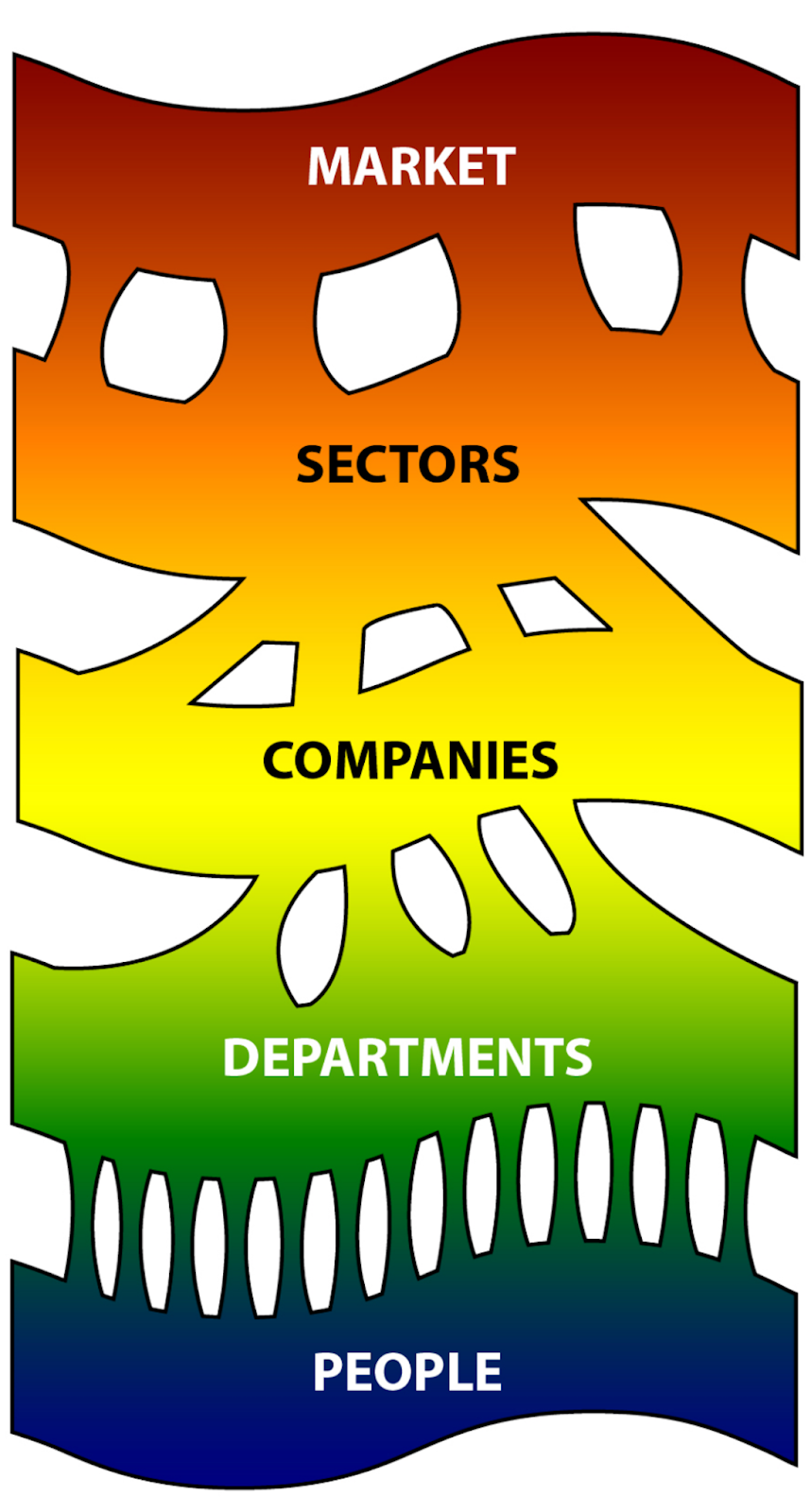
You might think the rise of cloud services, standardised metadata and APIs would make connecting these data silos easier. And in a strict technological sense, they do. But that’s a whole new work requirement, needing people to form new teams across departmental walls for no immediate benefit to themselves.
Many organisations are hierarchical, without easy “horizontal routes” enabling relationships between departments. And who has time for things that don’t win you any plaudits with your boss?
The key thought here: data is about technology, but the problem of data silos is a very human one.
Why are data silos bad?
The pain points are fivefold. But you’ll see they’re cut from the same cloth: resources, waste, and missed opportunities.
**More IT infrastructure than needed. **Duplicated effort needs duplicated technology – and in large companies it’s not a small issue. Think of the energy bills of hungry servers, twice as much data centre acreage as needed, SaaS subscriptions for far too many seats across the business.
**Management reports that don’t tell the truth. **Without a single version of the truth, board-level decision making takes place with incomplete information. How can the C-Suite set priorities and allocate resources when the picture of what the business is doing is lopsided?
Mistrust and suspicion between departments. When busy people are asked to collaborate on a goal, there’s a legitimate question of “What’s in it for me?” Especially in hierarchical org charts, the need to influence sideways to build consensus and understanding can slow execution to a crawl.
**Differences in data quality. **Each team will focus on data quality only to the extent it answers their own KPIs. Missing data points vital to another department will make the dataset useless outside the silo even if it’s successfully shared.
**Impact on the customer experience. **We’ve all had the jarring unpleasantness of Customer Service treating us like a new customer even though we have a 20-year history. When the data’s not joined up, service to the customer nosedives – a major churn factor in many sectors.
Solving data silos
So: data silos exist, connecting them is a Hard Problem, and the result may not deliver the outcomes you want anyway. What’s the answer? At Tilores, it’s a technique called entity resolution.
Entity resolution is the process of “comparing” different datasets and seeing the connections between them using rules-based intelligence. The core thought here: doing so avoids the need to build brittle, one-to-one pathways between a database in one department and a database in another that need constant maintenance and updates.
The Sales team may have one CRM profile of Jack Bell, with records of his purchases stretching back years. The Marketing department may have a J B Bell on its campaign list, with a different email address and records of what PDFs he’s downloaded. While Customer Service may have a Mr Jonathan Bell who phones in regularly each month. Connecting the disparate set of fields together across applications – or even a simple merge-and-purge – carries a lot of risks. What if they’re three different people?
This is where entity resolution comes in. Comparing the three records with each other in creative ways – perhaps seeing connections between the location of a web visitor’s IP address and his postcode, or discovering that times of web visits and service interactions coincide – uncovers insights that allow assumptions about identity. Find enough of them, and entity resolution can say with a high degree of certainty that all these Bells are the same person.
And once that’s established, you’ve brought different datasets together. Without the painstaking work of manually mapping fields from one record onto one of a different shape, with all the scope for errors that implies.
Data silos are a problem. Human nature is another. But maybe – just maybe – entity resolution can solve both.
CONCLUSION: don’t think data silos, think entity resolution
Entity resolution may sound a new concept, but in fact it’s solving problems like the silo’ing of data for thousands of companies. And because solutions like Tilores operate without exponential computing overhead – no fresh infrastructure needed – it can work at scale, teasing out deep patterns in inconsistent data to gather disparate data points into a coherent whole.
Letting the Marketing team know which customers have history. The Customer Service desk understand a problem’s commonalities. The C-Suite make decisions based on complete and accurate information. And so on.
Short answer
Unify customer data across CRM, marketing, product analytics, and support by creating a resolved customer entity that links source records from each system. The goal is not to force every tool into one database first; it is to identify which records describe the same person, household, account, company, or other customer entity, then make that resolved context available to downstream workflows.
Entity resolution is useful when the same customer appears as different names, emails, account IDs, devices, product users, support contacts, or marketing leads. Tilores resolves and assembles those records at ingestion, keeps source context available, and lets applications retrieve the resolved customer view at query time.
What causes customer data silos?
Customer data silos usually form because each department chooses tools around its own workflow: CRM for sales, lifecycle tools for marketing, event tracking for product, helpdesk systems for support, and spreadsheets when formal systems do not fit the job.
Over time, those systems collect different identifiers and different versions of the same customer. Mergers, local processes, inconsistent data quality, and unclear ownership make the gap wider.
What does a single customer view require?
A single customer view requires more than copying data into one place. It needs a stable way to decide which records belong together, which attributes came from which source, and how new records update the resolved customer context.
That is why entity resolution belongs near ingestion. The system can compare incoming records with existing entities, assemble the right context, and preserve references back to CRM, marketing, product analytics, support, or other source systems.
How does entity resolution connect CRM, marketing, and analytics data?
Entity resolution compares records across systems and links likely matches into one entity context. A CRM contact, campaign subscriber, product user, and support requester can then be recognized as the same customer even when each system stores a different identifier.
Downstream teams can query the resolved context instead of recreating fuzzy joins in every report, campaign, or support workflow. That makes the customer view more consistent without removing the source systems that teams still need.
How should teams start fixing silos?
Teams should start with a focused customer-data use case, such as support context, customer 360, suppression lists, fraud review, or lifecycle marketing. The first test should use real records with missing fields, duplicates, old emails, and conflicting attributes.
The evaluation should measure match quality, false positives, false negatives, source traceability, update speed, and whether each downstream team can use the resolved context without building its own identity logic.
Why are data silos a human and technical problem?
The original article is right to frame data silos as an organizational issue, not only a database issue. Departments protect workflows, tools, budgets, and responsibilities, so a purely technical integration plan can run into human incentives.
A resolved entity layer helps because it connects customer context across systems while allowing teams to keep the tools that support their day-to-day work. The technical architecture should reduce coordination friction, not add another shared project that nobody owns.
Frequently Asked Questions
- How do I unify customer data across CRM, marketing, and product analytics?
- Create a resolved customer entity that links records from each system, preserves source context, and exposes that resolved view to downstream workflows. Entity resolution helps when identifiers differ across CRM, marketing, analytics, and support tools.
- What causes data silos in customer data?
- Data silos are caused by separate departmental tools, local spreadsheets, mergers, inconsistent identifiers, different data-quality standards, and incentives that make each team optimize its own workflow before the company-wide customer view.
- How can entity resolution fix data silos?
- Entity resolution compares records from different systems, links records that describe the same real customer, and assembles a resolved customer context that downstream teams can retrieve and use.
- Is a data warehouse enough to solve customer data silos?
- A warehouse can centralize data, but it does not automatically decide which records describe the same customer. Teams still need identity logic, source traceability, and a way to update the customer view as new records arrive.
- What should teams test before rolling out a single customer view?
- They should test real records with duplicates, old emails, partial identifiers, conflicting fields, and similar customers who should stay separate. The review should include match quality, false positives, false negatives, source traceability, update speed, and downstream usability.
Evaluate Tilores on your own data
Use the next step that matches your evaluation stage.
See what resolved entity data does for your business — and your AI.