How Does a Bank Make a Vulnerability Flag Follow the Customer Across Every Account? Consumer Duty in 2026

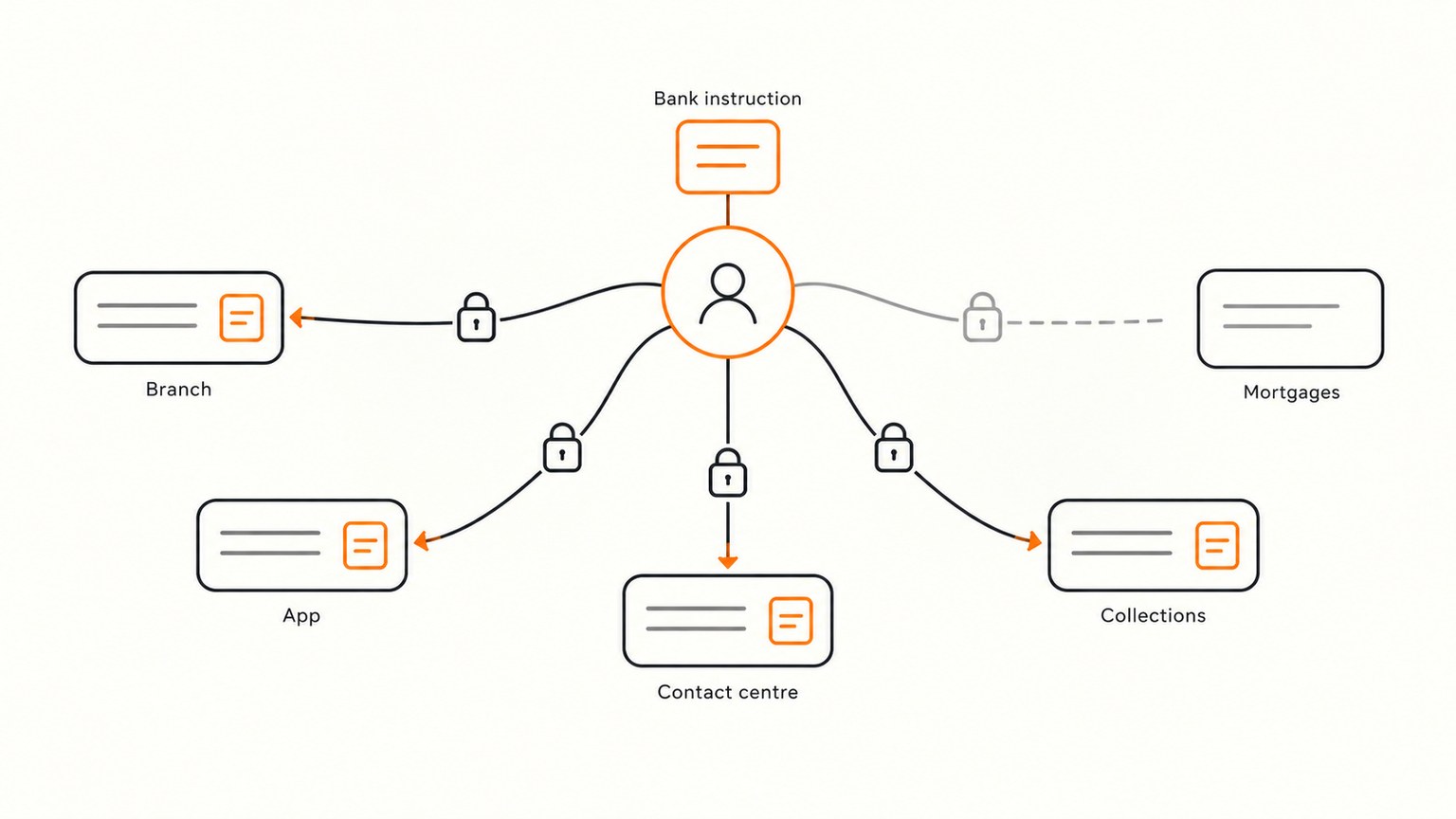
TL;DR: Link the bank’s support record to the correctly resolved person, then let authorised services retrieve the current instruction. With Tilores, we connect customer records and expose identity changes for the bank’s integrations. The bank still controls sensitive-data access, keeps support instructions current and checks that every relevant service acts on the recorded need.
Book a Demo · Try Tilores Studio (Free)
On this page
- Why does a bank lose a support need between accounts?
- What should follow the customer across channels?
- How do you connect the support record to the customer?
- What happens when customer records merge or split?
- How do you stop a temporary flag becoming permanent?
- How can a bank check coverage across every account?
- Frequently asked questions
- Sources
A customer should be able to tell their bank about a bereavement without starting again at the next product team. The technical problem begins when those teams recognise the same person through different customer numbers, and the support instruction stays attached to only one of them.
For a UK bank, the useful question is whether the next interaction changes because the need was recorded. A shared flag that reaches the wrong person is dangerous. A correct flag that never reaches mortgage servicing is ineffective. The identity link, the permission to see the information and the action taken all need checking.
Why does a bank lose a support need between accounts?
A support need gets lost when the next service cannot connect its customer record to the person who disclosed it. A note in the contact centre’s CRM will not help mortgage servicing if its local borrower identifier never reaches that CRM.
Consider a bereaved customer who asks for written contact while dealing with an estate. The contact centre records the request. A week later, collections calls from another customer record. Both interactions happened inside the same bank, but only one service had the current instruction.
The FCA’s review of bereavement and power-of-attorney journeys found repeated disclosures and fragmented CRM systems across business lines. That supports investigating disconnected records. It does not establish that identity matching caused every failure: staff also have to read and act on the information available.
What does Consumer Duty require here?
The British Consumer Duty concerns customer outcomes. PS22/9 sets out that framework, while FG22/5, paragraph 9.11 says the support channels a firm offers must meet its customers’ needs; it does not require every possible channel. A connected support record is one design for improving delivery, not an FCA-prescribed database architecture.
What should follow the customer across channels?
The current support instruction should follow the correctly identified customer, with access limited to the people and services that need it. The underlying sensitive narrative can remain in a more restricted case record.
Keep three things separate: the person, their support need and any representative’s authority. A bereaved spouse is a different person from the deceased account holder. An attorney is also a separate person; their permission to act needs its own scope and checks. Matching a name or address cannot establish that authority.
FG21/1, paragraph 3.17 explains why recording and accessing needs matters for consistent service. For the bank’s operational record, retain:
- A support-case identifier, independent of an entity ID.
- The source of the disclosure and the source-record identifiers used to confirm its subject.
- The agreed adjustment, its applicable products and permitted recipients.
- Its current status, review date and the owner responsible for changing it.
These are proposed record fields. Their detail should serve a stated purpose: the ICO’s data-minimisation guidance requires information to be adequate, relevant and limited to what is needed. A service that needs to offer written contact need not receive the full bereavement conversation.
New posts on entity resolution, identity data and AI. No spam, unsubscribe any time.
How do you connect the support record to the customer?
Connect source identifiers to a resolved person first, then let authorised services retrieve the current support instruction through that mapping. The bank keeps ownership of the support record and the service action.
- Record the need and its subject. Agree the practical adjustment with the customer and record who it concerns. Preserve the disclosure’s source, date and case reference. Distinguish a customer’s own circumstances from information they provide about another person.
- Resolve the source records. Map core banking, card, CRM and mortgage identifiers into the customer master. Retain each source namespace so identical local ID strings do not collide. Ambiguous matches require a defined review route before sensitive information reaches another profile.
- Define permitted access. Specify which roles, products and legal entities need which fields. The 2026 FCA and ICO joint statement addresses lawful vulnerability-data use. Health information needs an Article 6 lawful basis and an Article 9 condition. A group-wide identity match does not itself authorise group-wide disclosure.
- Connect every relevant service. At the point of contact or before an automated action, the service retrieves the instruction for the already resolved customer and checks its current status. Give cached instructions a version and freshness rule. Agree the response when the lookup is unavailable, including a route to human support.
- Process identity and support changes. Consume entity changes and support-record updates as separate event flows. Reconcile current state after missed events. Repeated delivery must not create duplicate cases, repeat a customer contact or restore an obsolete instruction.
- Test the adjustment in the actual journey. Confirm the record reaches each intended service, then test whether the service acts on it. Include a changed need, an unavailable dependency, an ambiguous match and a corrected identity. Keep evidence of the result and an owner for each exception.
Where does Tilores fit in customer support?
With Tilores, our matching engine supplies the resolved identity layer: we assemble related records as data is ingested and make the current entity available through GraphQL. Entity resolution does not detect vulnerability. In this design, the bank’s support system records the need, decides the adjustment and controls its distribution.
We can protect configured fields and objects through GraphQL privileges and narrowed client scopes. The bank must design and test that configuration, including which services may retrieve the practical adjustment and which may read the underlying narrative. Ask us to demonstrate a permitted lookup and a denied one, then test the bank’s own integration from each account identifier through to the service action.
If a reliable customer identifier already reaches every service, start with that identifier and repair the support integration. A new matching engine will not fix a staff member ignoring an instruction. The FCA’s good-practice findings include failures to check information already recorded, which need a different remedy.
What happens when customer records merge or split?
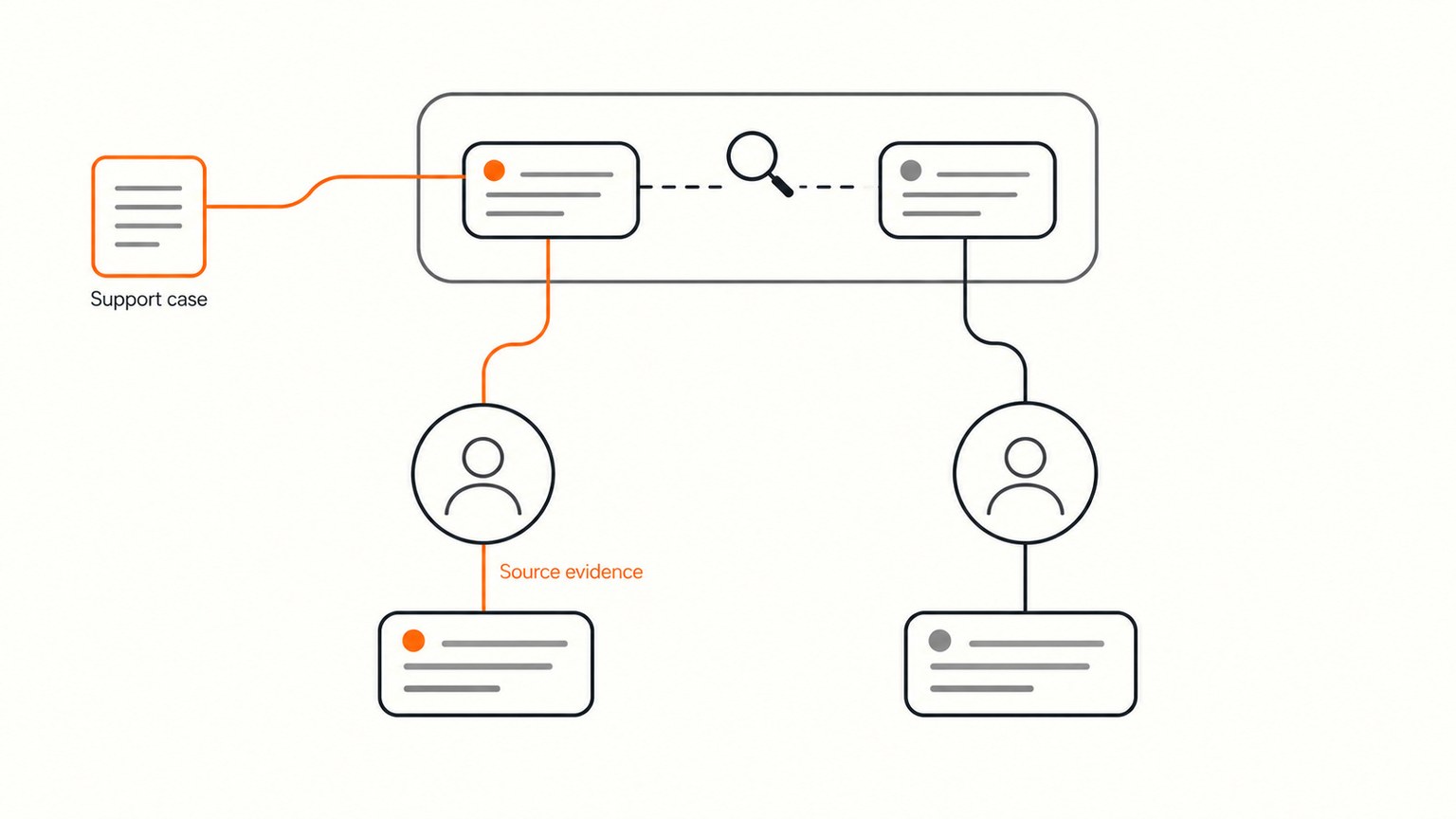
After a merge, reconnect each support case to its confirmed subject. After a split, use the case’s source evidence to establish which resulting customer it belongs to. Copying a sensitive flag to every successor spreads the original error.
Our entity-ID documentation describes why IDs can change. A merge preserves one entity ID; a split can leave one part with the old ID and give others new IDs. A support service keyed only to an old entity ID can therefore lose the case or attach it to the wrong person.
We publish merge and split changes through our entity event stream. When integrating Tilores, make the bank’s consumer update its mappings and clear stale copies before the next support decision. This stream is distinct from our GraphQL API; it is not an automatic connection to branch or collections software.
How should a bank correct a wrongly attached flag?
Separate correction of the identity link from correction of the support record. Removing an incorrect connection can split an entity; the bank must then withdraw the wrongly assigned instruction from affected consumers and preserve the reason for that correction.
Our downstream merge-and-split guide covers the general reference-handling problem. For this support case, the decisive evidence is which source record received the disclosure and which person it described. Keep an unresolved case available to authorised support staff for review instead of guessing its successor.
How do you stop a temporary flag becoming permanent?
Review the support need with the customer and update the instruction at its authoritative source. A review date should prompt a decision, not silently declare that a person no longer needs help.
Record what changed, who confirmed it and when the new instruction took effect. The ICO’s accuracy guidance supports checking sources, distinguishing fact from opinion and correcting misleading information. Each consuming service should receive the new version, including a clear closed state when the adjustment is no longer required.
Closing an operational instruction and erasing its history are different decisions. Under the ICO’s storage-limitation guidance, retention must follow a justified purpose and be reviewed. Decide what evidence remains necessary, who can see it and when it should be erased or anonymised.
How can a bank check coverage across every account?
Trace one test customer’s current instruction through every relevant service, using each service’s own identifier. Count a service as covered only when it can retrieve the right instruction and demonstrate the intended action.
For that bereavement scenario, assume five services need the agreed contact adjustment. Four retrieve it; mortgage servicing does not. Technical reach is 4 ÷ 5 = 80%. That number describes the test case, not a compliance score or an acceptable target.
Illustrative coverage check for one customer’s agreed contact adjustment
| Service | Identity route | Instruction reached? | Action to test |
|---|---|---|---|
| Branch | Branch customer ID to resolved person | Yes | Staff offer the recorded contact adjustment. |
| App | Authenticated customer ID to resolved person | Yes | The support journey offers the agreed route. |
| Contact centre | CRM record to resolved person | Yes | Staff can respond without asking the customer to repeat their circumstances. |
| Collections | Collection-case customer ID to resolved person | Yes | Contact decisions use the current instruction. |
| Mortgage servicing | Unlinked legacy borrower record | No | Resolve the record and repeat the end-to-end test. |
Keep failed lookups separate from incorrect links, stale instructions and failures to act. A channel can display the correct flag and still provide poor support. PRIN 2A.9 requires monitoring of customer outcomes, communications and support, with action when failures are identified.
The FCA’s wider vulnerability review retained FG21/1 alongside the Duty; it did not create a new single-flag technology mandate. The practical check for this quarter is narrower: find the service that still makes the customer explain their circumstances again, establish why, and repeat the journey after the repair.
Frequently asked questions
Does a vulnerability flag automatically cover a joint account holder?
A vulnerability flag concerns the person whose need was recorded. A joint account links people to an account; it does not make their circumstances interchangeable. The bank must establish whose support need and whose authority apply before exposing information or changing service.
Must a bank obtain consent for every vulnerability record?
A bank must establish the lawful basis for its processing. The FCA and ICO describe several possible bases; health information also requires an Article 9 condition. Consent is not a universal answer for every record or use.
Can the same customer identity support screening and customer care?
The resolved customer can be a shared identity reference, while permissions and purposes remain separate. Sanctions, politically exposed person (PEP) and adverse media checks do not authorise reuse of a sensitive support narrative. Customer-care adjustments need their own access rules.
Does entity resolution make a bank compliant with Consumer Duty?
Entity resolution can connect the customer records that support delivery depends on. The bank still has to provide suitable support, train staff, maintain lawful access and monitor outcomes. Matching success alone cannot establish Consumer Duty compliance.
Sources
- FCA: PS22/9, A new Consumer Duty
- FCA: FG21/1, Guidance for firms on the fair treatment of vulnerable customers
- FCA: FG22/5, Final non-Handbook Guidance for firms on the Consumer Duty
- FCA: Retail banks’ treatment of customers in vulnerable circumstances Multi-Firm Review: good practice and areas for improvement
- FCA and ICO: Joint statement on regulatory expectations regarding firms’ approaches to vulnerability related data
- FCA: Delivering good outcomes for customers in vulnerable circumstances, good practice and areas for improvement
- FCA: Firms’ treatment of customers in vulnerable circumstances, review
- ICO: Principle (c), Data minimisation
- ICO: Principle (d), Accuracy
- ICO: Principle (e), Storage limitation
- FCA Handbook: PRIN 2A.9, Monitoring of consumer outcomes
- Tilores documentation: What is an Entity?
- Tilores documentation: API Reference, disassemble and Entity Event Stream
See what resolved entity data does for your business — and your AI.