What Does the EU Anti-Money Laundering Regulation Ask of a Bank's Customer Data? A 2026 Readiness Check for July 2027

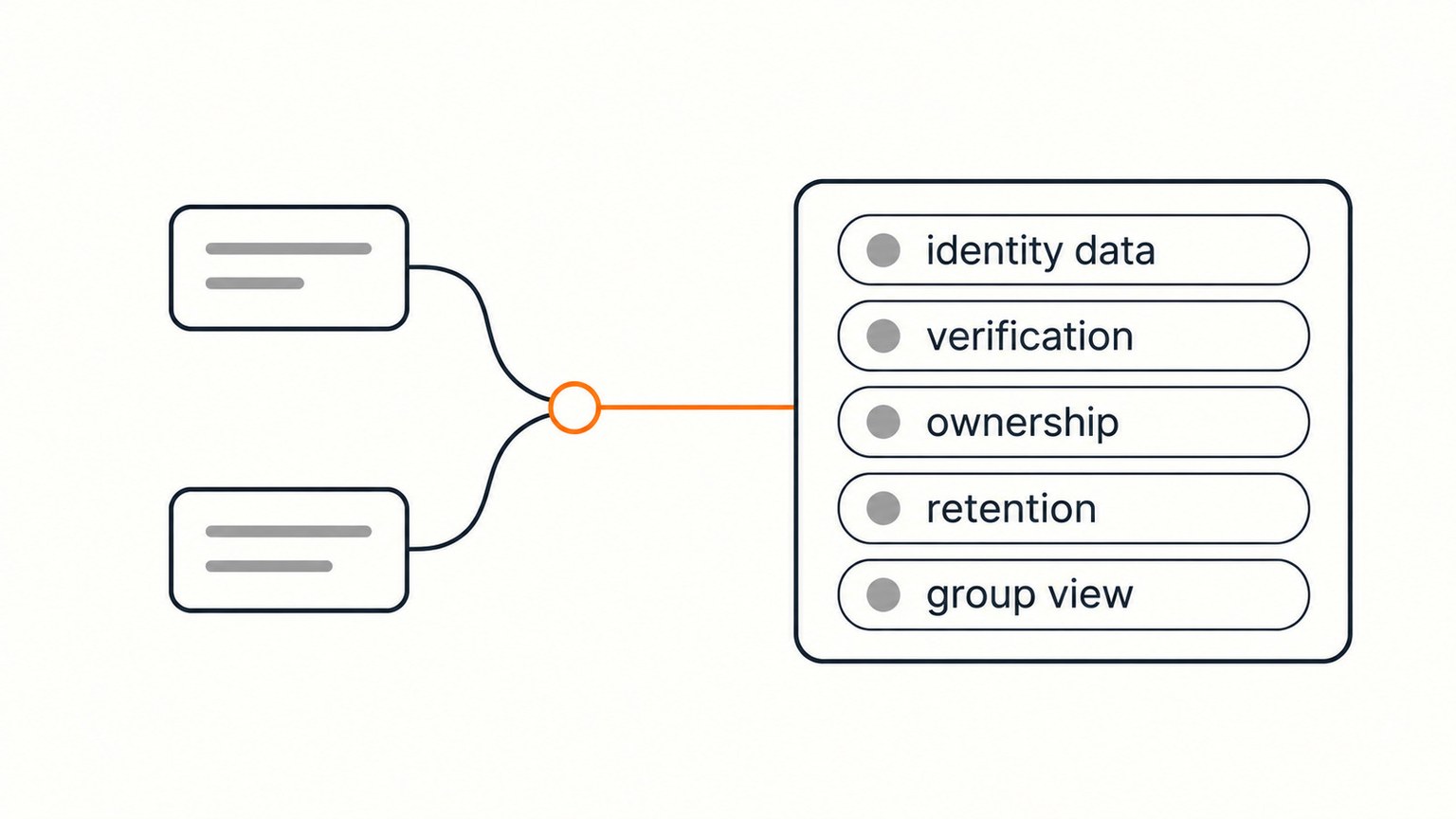
TL;DR: The AMLR names no matching method. From 10 July 2027 it expects each customer’s due diligence to cover every product, stay current, identify beneficial owners and remain retrievable for five years. That starts with knowing which records are one customer. With Tilores, we resolve that linkage with a reason for every link; CDD and risk decisions stay with the bank.
Book a Demo · Try Tilores Studio (Free)
On this page
- When does the AMLR apply, and which banks does it bind?
- What does the AMLR ask of each customer’s data?
- Where do duplicate or split records break those obligations?
- What must the matching layer be able to show?
- Where does Tilores fit in an AMLR data programme?
- How ready is your customer data for July 2027?
- Why resolve customers before you screen them?
- When can a bank defer the back book?
- Frequently asked questions
- Sources
Assume a bank runs current accounts and consumer loans on two systems with no shared customer key. The current-account record holds Katharina Weber, verified at her present address in 2025. The loan record, opened in 2019, holds Katarina Weber at her previous address, with the same date of birth. Nobody has linked them.
A supervisor asks for this customer’s due diligence file. Which record is it? Under the new EU regulation the file has to cover both relationships: Article 26(1) asks for due diligence measures that cover all of a customer’s products and services. A screening tool cannot assemble that file while the bank cannot say that the two records are one person.
So the July 2027 deadline is a data-linking deadline before it is a screening deadline. Link the records, prove each link, then decide what screening needs to change.
When does the AMLR apply, and which banks does it bind?
The Anti-Money Laundering Regulation, Regulation (EU) 2024/1624, applies from 10 July 2027 under Article 90. It is directly applicable in every Member State, so a bank’s due diligence rules will come from one EU text.
Credit institutions are obliged entities under Article 3, and Article 2(1)(5) includes EU branches of banks headquartered outside the Union.
Some detail is still being written. Article 28(1) asked the EU’s new anti-money laundering authority, AMLA, to draft technical standards on the information to collect for due diligence. In its press release of 1 October 2026, AMLA said it had submitted final drafts on due diligence, linked transactions and group-wide arrangements to the European Commission. They are proposed to apply six months after entry into force, once adopted and published. Until then, plan around the regulation’s own articles and treat the final draft standard on customer due diligence as a strong indication, not settled law.
What about UK banks and their EU subsidiaries?
The AMLR does not bind a UK bank’s UK business. In the UK, regulation 27 of the Money Laundering Regulations 2017 sets when due diligence applies and regulation 28 sets the measures, including understanding ownership and control. Regulation 40 requires due diligence records to be kept for five years from the end of the business relationship.
A UK group’s EU-authorised subsidiary bank is a credit institution in its Member State, so it falls under the AMLR from July 2027.
What does the AMLR ask of each customer’s data?
The AMLR never mentions matching. It attaches data obligations to each customer, and several work only if the bank knows which records are that customer.
Customer data obligations in Regulation (EU) 2024/1624
| Provision | What it asks | What the data must support |
|---|---|---|
| Article 22(1)(a) | All names and surnames, place and full date of birth, nationalities, residence | One set of identity attributes per natural person |
| Article 23(1) | Verify identity before the relationship starts | An existing-customer check at onboarding |
| Articles 20(1)(b) and 22(2) | Identify beneficial owners and understand the ownership structure | Owners linked to the people they are |
| Article 26(1) | Due diligence covers every product; group information is considered | One customer across products and group entities |
| Article 26(2) | Keep information up to date: at most 1 year for higher risk, 5 years otherwise | One review date per customer |
| Article 21(3) | Record due diligence actions, decisions and justifications | A reason behind each data decision |
| Articles 77(3) and 78 | Retain for 5 years; answer authority enquiries fully and speedily | Retrieval of former customers by person |
The identification list in Article 22(1) starts with “all names and surnames” and “place and full date of birth”, and Article 23(1) puts verification before the relationship starts, outside lower-risk cases. Article 20(1) adds beneficial owners and the ownership structure in point (b), sanctions verification in point (d) and the politically exposed person check in point (g).
Two provisions turn this into a whole-customer duty. Article 26(1) says that where business relationships cover more than one product or service, obliged entities must ensure that due diligence measures “cover all those products and services”, and that a group entity must take into account information about the same customer’s relationships with other group entities. Article 16(3) has group entities share customer and beneficial owner identity where relevant.
Then the records: Article 21(3) wants “records of the decisions taken” with justifications, Article 77(3) keeps them five years after the relationship ends, and Article 78 requires systems to “respond fully and speedily” when an authority asks about relationships with specified persons in the past five years.
New posts on entity resolution, identity data and AI. No spam, unsubscribe any time.
Where do duplicate or split records break those obligations?
Because each obligation attaches to a customer, a customer split across records breaks them in predictable places. Take the Weber records again, with two product systems, no shared key and a screening run per system.
- A split file. Neither record shows every product that Article 26(1) asks due diligence to cover.
- Two review clocks. The Article 26(2) update period runs per customer; two records give two review dates and two addresses.
- An incomplete answer to an authority. An Article 78 enquiry names a person; a search on “Katharina Weber” misses the record held under the variant spelling.
- Inconsistent group answers. A third record in a subsidiary means Article 16 sharing exchanges three partial customers.
Transaction monitoring suffers too. Article 19(1)(b) applies due diligence to occasional transactions of at least EUR 10 000, in one operation or through linked transactions as defined in Article 2(1)(20). AMLA’s final draft standard under Article 19(9) warns that missed links let criminals operate just below the threshold. One person under two identities is harder to link.
The reverse failure matters too: a wrong merge puts one person’s data in another’s file, as our guide to wrong customer matches as GDPR incidents explains. The goal is the right customer, not the fewest records.
What must the matching layer be able to show?
If the customer file depends on linking records, the linking becomes part of the due diligence evidence. Article 20(4) says obliged entities must “at all times be able to demonstrate to their supervisors” that their measures are appropriate. For the matching layer, that points to four properties.
- A reason for each link. For any two records in one customer, the bank can show which rule joined them and on which fields. A model score above a threshold restates the decision; it does not explain it.
- Reversible links. A wrong link can be removed, with who and why recorded, and kept from re-forming.
- Rules that block wrong merges. Attributes such as a national identification number must agree across a customer’s records; a conflict should stop the merge however similar the names.
- An answer at onboarding. Verification happens before the relationship starts under Article 23(1), so the existing-customer check has to return while the application is still open.
Keep matching methods distinct in the evidence. Deterministic rules compare values that must agree; fuzzy comparisons handle variants such as Katharina and Katarina; probabilistic or machine learning scores weigh evidence statistically. A bank should be able to run rules alone.
Where does Tilores fit in an AMLR data programme?
We build the matching layer between onboarding, core banking, KYC and screening systems. In an AMLR programme its job is to make “the customer” one retrievable entity, with a reason for every link, for the bank’s own due diligence and screening tools.
Every link carries its rule. When two records join, we store the edge as record A, record B and the rule ID. Our GraphQL API returns an entity, by entity ID or by any member record ID, with its member records and those edges. An analyst can answer “why are these one customer?” from the data, and the answer can sit in the Article 21(3) record.
Search is separate from matching. At onboarding, a search returns candidate entities ranked by a hitScore; only a match rule creates a link. On our managed AWS service a search returns in about 150ms, as listed on our deployment page, so the existing-customer check fits inside the application flow. One engine and rule set serve the back book and real time, so both give the same answer.
Wrong merges can be blocked and are reversible. Our consistency rules can require an identifier to be unique inside an entity, so a conflicting record does not join. We mark the feature as new and note that it might not work in every case, so test it against your own edge cases. With our disassemble mutation you can remove edges or records and split the entity; we log the user and reason, and can ban the split entities from merging again. Since our 23 October 2026 release, you can opt in to deferral with "joinStrategy": "defer": a weakly matching record then stays apart and the review case lists the candidate entity. By default we join first and review afterwards.
Changes are previewed and traceable. We keep original values beside the normalised matching values. With submitWithPreview and dryRun set to true, you see how records would form entities before anything is ingested. On our financial-services platform, every record carries its source and every query and deletion is logged.
We deploy as Managed Cloud on AWS, in the bank’s own AWS account, in another cloud, or on premises including air-gapped environments.
We do not decide due diligence measures, risk ratings, whether a screening alert is a true match, or what to report to the financial intelligence unit, and using Tilores does not make a bank compliant with the AMLR. We give the people who make those decisions one customer, and the evidence for why it is one.
How ready is your customer data for July 2027?
Turn the obligations into evidence and proof-of-concept tests on your own back book. Clean sample data proves little; your duplicates, variants and closed relationships prove a lot.
Readiness check: obligation, evidence and proof-of-concept test
| Obligation | Evidence to produce | Test on your back book |
|---|---|---|
| Verify before onboarding (Art. 23) | Existing customer found before account opening | Submit applications that match existing customers; count those found |
| All products covered (Art. 26(1)) | One customer view listing every product | Resolve customers known to hold two products |
| Kept up to date (Art. 26(2)) | One review date and current address per customer | Check that the newer verified address shows, with the old one kept |
| Beneficial owners (Art. 20(1)(b)) | Each owner resolved to one person | Load company customers whose owners are also retail customers |
| Decision records (Art. 21(3)) | Rule and fields behind each link | Ask for the rule behind every link in a sample |
| Authority enquiries (Art. 78) | Five-year relationship answer for a named person | Query closed customers by name variants and date of birth |
| Group information (Art. 16(3)) | One identity answer across group entities | Resolve the same customers from two group extracts |
| Sanctions re-checks (Art. 26(4)) | Each customer screened once per list update | Re-screen after an update; compare alerts per record and per entity |
Agree expected answers before the test runs. Our guide to agreeing matching rules with a vendor before a PoC shows how.
Why resolve customers before you screen them?
Screening is only as good as the profile it checks. Article 20(1)(d) requires verification of whether the customer or beneficial owners are subject to targeted financial sanctions, and Article 26(4) requires credit institutions to repeat that verification upon any new designation. Run that against three fragments of one person and the bank gets three partial checks and possibly three different conclusions.
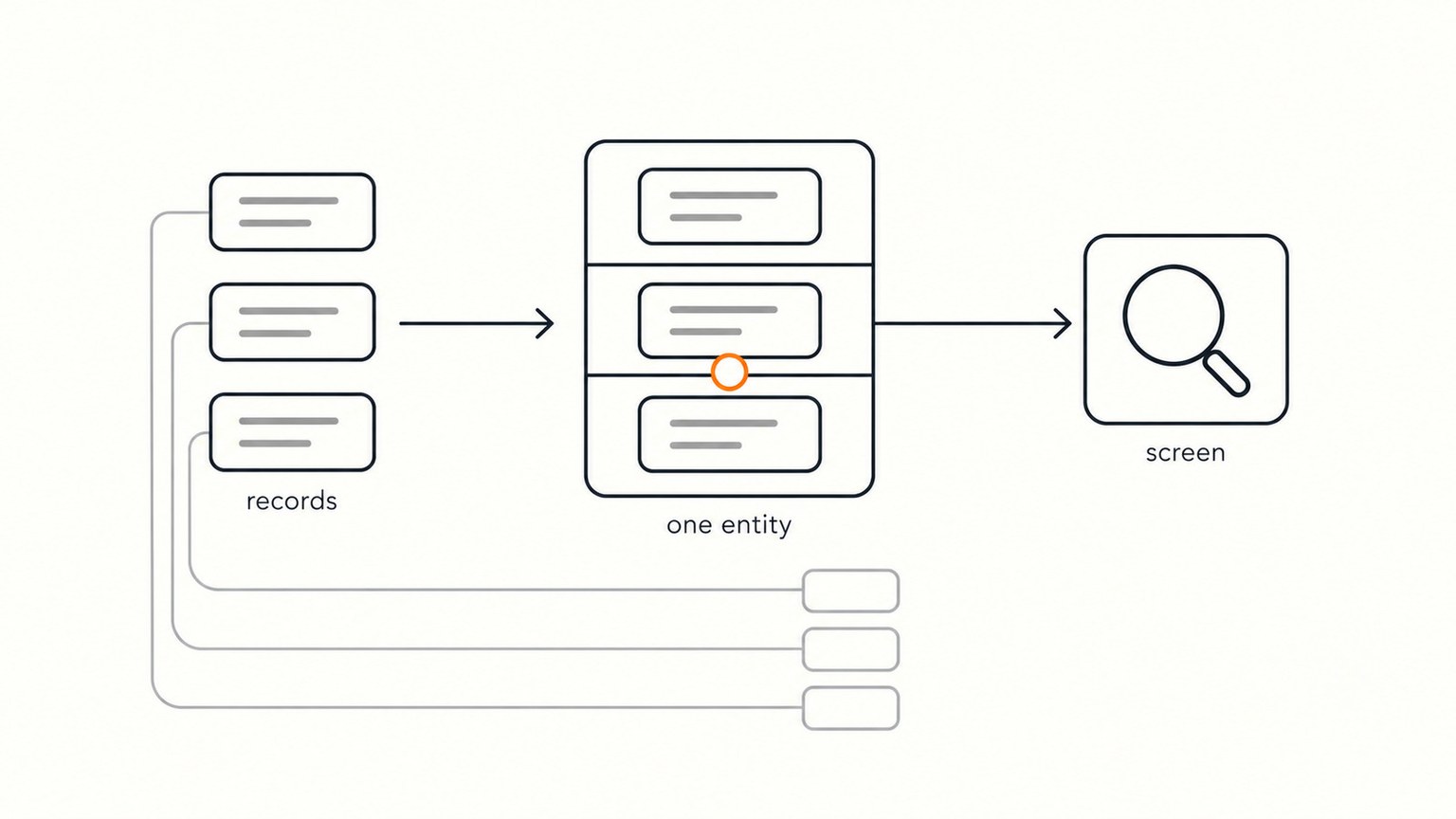
The order that follows is short:
- Resolve. Link every record that belongs to one customer, with a rule behind each link and conflicts sent for review.
- Screen. Check each resolved customer and its beneficial owners against sanctions and politically exposed person lists, and run adverse media checks where the bank’s risk policy requires them.
- Re-screen. Repeat the check on each customer when a list changes or a new record joins.
We built this order into Tilores Studio, which now resolves a customer list and then screens each entity against OpenSanctions data. OpenSanctions collects sanctions lists, politically exposed person data and other watchlists from more than 400 sources. Our Studio runs locally for evaluation and highlights what changed when you load a newer OpenSanctions export. The screening decision and alert review remain with the bank’s compliance team. For how resolution feeds monitoring, see our article on AML and KYC with real-time entity resolution.
When can a bank defer the back book?
Not every bank needs a full remediation project before July 2027. A small bank on one core system, with one customer key and few duplicates, can resolve at onboarding first and work through existing customers at their next scheduled review. The answer changes when products sit on separate systems, after acquisitions, or when a group shares customers, because Article 26(1) and the Article 78 enquiries reach records onboarding never touches.
The technical standards may still change what must be collected. That argues for fixing linkage now, which every version depends on, and holding attribute-level changes until adoption.
For a 2027 programme, three lines:
- Fix identity linkage first, so each customer is one entity with a reason for every link.
- Test that linkage on your own back book in a proof of concept, against expected answers agreed in advance.
- Then size the screening change, on resolved customers instead of raw records.
Frequently asked questions
Does the AMLR require a bank to use entity resolution?
No. Regulation (EU) 2024/1624 names no matching method. It requires due diligence covering every product, current information and decision records for each customer. How a bank links records is its choice; we offer one way to make each link explainable.
When does the AMLR apply to banks?
From 10 July 2027, under Article 90, and it is directly applicable in every Member State. AMLA announced on 1 October 2026 that it had submitted its final draft technical standards on customer due diligence to the European Commission; they apply only once adopted and published.
Can Tilores make a bank compliant with the AMLR?
No. We resolve which records belong to one customer and store the rule behind every link. Due diligence measures, risk ratings, screening outcomes and suspicious transaction reports remain the bank’s decisions.
Should a bank resolve its back book before July 2027?
It depends. A bank on one core system with few duplicates can start at onboarding. Where products sit on separate systems or a group shares customers, Article 26(1) and Article 78 reach existing records, so plan the back book early.
Sources
- Regulation (EU) 2024/1624 on the prevention of the use of the financial system for the purposes of money laundering or terrorist financing, EUR-Lex, Publications Office of the European Union (Articles 2, 3, 16, 19 to 23, 26, 28, 77, 78 and 90, checked 1 November 2026).
- Press Release: AMLA finalises key standards for the private sector, 1 October 2026, Authority for Anti-Money Laundering and Countering the Financing of Terrorism.
- Final Report: Draft Regulatory Technical Standards under Article 28(1) of Regulation (EU) 2024/1624, 30 September 2026, AMLA.
- Final Report: Draft Regulatory Technical Standards under Article 19(9) AMLR, AMLA.
- The Money Laundering, Terrorist Financing and Transfer of Funds (Information on the Payer) Regulations 2017, regulation 27: Customer due diligence, legislation.gov.uk, The National Archives.
- The Money Laundering Regulations 2017, regulation 28: Customer due diligence measures, legislation.gov.uk, The National Archives.
- The Money Laundering Regulations 2017, regulation 40: Record-keeping, legislation.gov.uk, The National Archives.
- OpenSanctions, OpenSanctions.
- GraphQL API Reference, Tilores.
- Consistency, Tilores.
- Release Notes, v0.100.0, 23 October 2026, Tilores.
- Entity Resolution for Financial Services, Tilores.
- Deployment, Tilores.
- Resolve First, Then Screen: Tilores Studio Now Checks Your Customer List Against OpenSanctions, Tilores.
- AML and KYC With Real-Time Entity Resolution, Tilores.
- How a Bank and Its Entity Resolution Vendor Agree on Matching Rules Before a PoC, Tilores.
- Is a Wrong Customer Match a Reportable GDPR Incident, and What Must a Bank Document?, Tilores.
- A £160K Sanctions Miss: How to Test Entity Resolution on Your Own Data Before You Buy, Schmitdy Gadget, YouTube, 2026.
See what resolved entity data does for your business — and your AI.